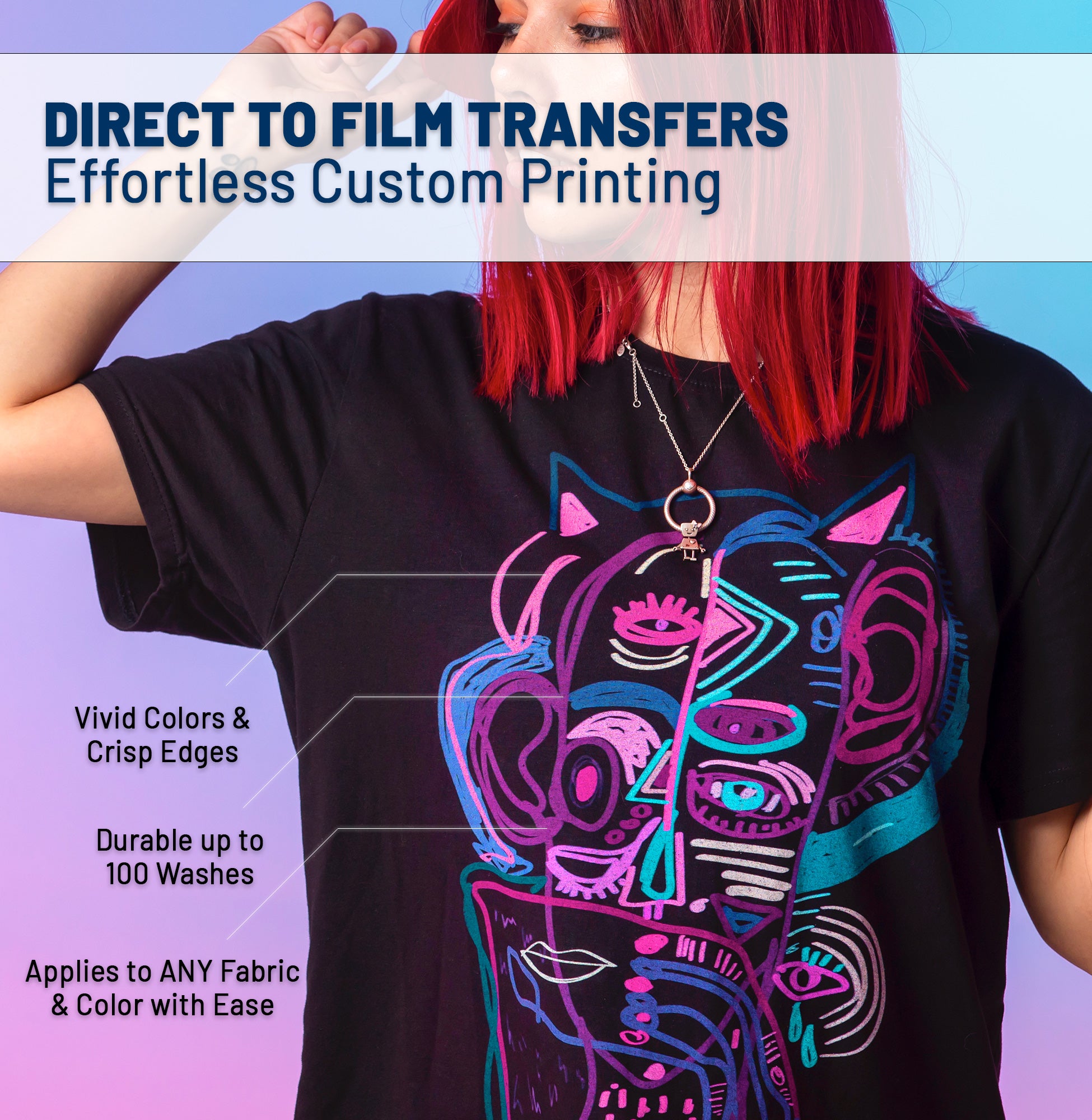




For years, if you wanted a full-color, photo-realistic print that felt like nothing on the shirt, Dye Sublimation was your only choice. But it came with a huge catch: it only worked on white polyester. Enter Direct-to-Film (DTF), the technology that promised to do what sublimation couldn't—print on anything. In 2026, is there still a place for sublimation? Let's settle the debate.
🌈 What is Sublimation Printing?
Dye Sublimation is a chemical process where solid ink turns directly into gas without becoming liquid. When heated, this gas bonds with polyester fibers, effectively dyeing the fabric itself.
Pros of Sublimation:
- Zero "Hand" (Feel): The ink becomes part of the shirt. You cannot feel the print at all.
- Permanent: Since it dyes the fabric, it will never crack, peel, or fade (unless the shirt itself fades).
- Continuous Tone: Perfect for all-over prints and photographic gradients.
Cons of Sublimation:
- The "Polyester Prison": You strictly need 100% polyester for vibrant results. 65% poly blends look "vintage" or faded. Cotton is impossible.
- Light Colors Only: Sublimation printers don't use white ink. You cannot print on black, navy, or red shirts.
- Press Marks: High heat (400°F) often leaves a square "box" mark on polyester fabrics.
🔥 What is DTF Printing?
Direct-to-Film prints wet ink onto a special film, which is then coated with a hot-melt adhesive powder. It sits on top of the fabric rather than dyeing it.
Pros of DTF Transfers:
- Fabric Freedom: Works on Cotton, Polyester, Nylon, Silk, Denim—anything that can take heat.
- Dark Garments: Thanks to the white ink underbase, prints pop vibrantly on black shirts.
- Vibrant Colors: Modern DTF inks are incredibly opaque and bright.
- Ease of Use: No need to worry about "ghosting" or gas migration.
Cons of DTF Transfers:
- Texture: It does have a "feel" (plasticized texture), although it is much thinner than vinyl.
- Breathability: A large solid cheat print can feel sweaty as it blocks airflow.
⚔️ The Showdown: Comparison Chart
| Feature | 🌈 Sublimation | 🔥 DTF Transfers |
|---|---|---|
| Can I print on Cotton? | NO (Washout happens) | YES (Any fabric) |
| Can I print on Black? | NO | YES (White ink support) |
| Feel / Hand | Zero feel (Softest) | Smooth, rubbery feel |
| Durability | Permanent | High (50+ Washes) |
| Start-up Cost | Low ($500 for printer+press) | Low ($200 for press + buy transfers) |
🏆 The Comparison Verdict
Stick to Sublimation If:
- You primarily sell white performance fishing shirts or jerseys.
- You are making hard goods like mugs, tumblers, and keychains (Sublimation is king here!).
- Your customers demand zero-texture prints.
Switch to DTF If:
- You want to sell black or dark-colored t-shirts (the best sellers!).
- You want to print on cotton, hoodies, tote bags, and jackets.
- You want to avoid the "shine" or "box" marks of high heat.
- You don't want to buy a dedicated printer—just order transfers.
💡 A Common Myth: "Subli-Cotton" Sprays
You may see videos about "Sublimation Coatings" or sprays that let you sublime on cotton. We do not recommend this for a professional business. These coatings wash out after 3-5 cycles, leaving your customer with a faded shirt and you with a bad reputation. If you need to print on cotton, DTF is the only professional choice.
Stop Limiting Your Business to White Polyester
Unlock the ability to print on Any Color, Any Fabric today.
Get Your First DTF Transfer →