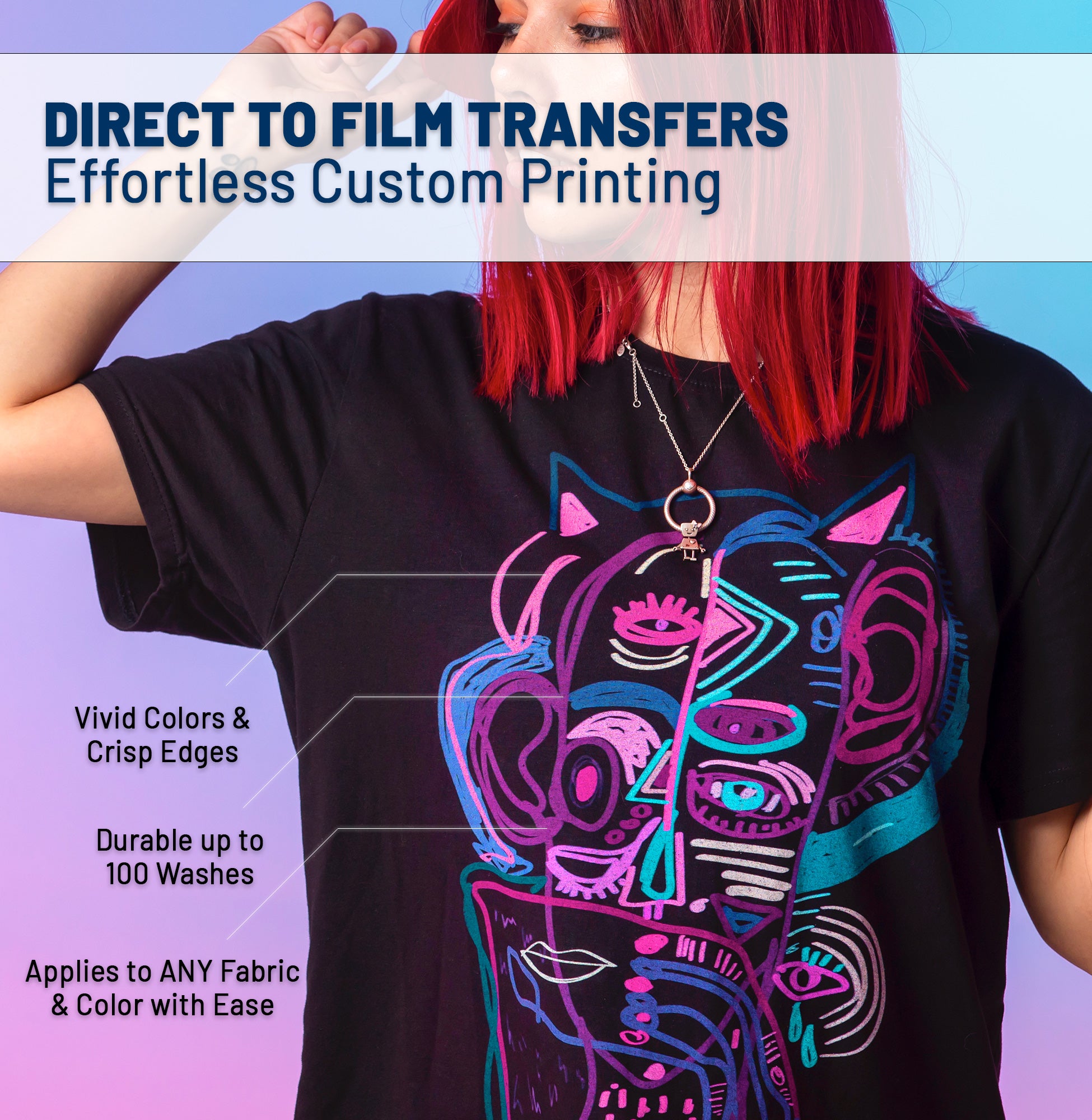




For decades, embroidery was the undisputed king of "premium" custom apparel, while screen printing handled the rest. But the rise of Direct-to-Film (DTF) transfers has shaken up the industry. Today's print shops face a tough question: Should you thread it or press it? Let's dive into the pros, cons, and bottom-line realities of DTF vs. Embroidery.
🧵 What is Embroidery?
Embroidery involves stitching thread directly into the fabric using a computerized machine. It's the traditional standard for hats, polo shirts, and corporate uniforms.
Pros of Embroidery:
- Perceived Value: Looking "expensive" and professional.
- Durability: The design is physically part of the garment.
- Start-up Friendly (Outsourced): Easy to find contract embroiderers.
Cons of Embroidery:
- Detail Limitations: Cannot replicate photos, gradients, or tiny text.
- Cost Highs: Pricing is based on stitch count (more complex = more money).
- Digitizing Fees: You pay to have your art converted into a stitch file (.DST).
- Comfort: Heavy stitching can feel scratchy on the inside of the shirt.
🔥 What are DTF Transfers?
Direct-to-Film printing prints a design onto a special PET film, coats it with adhesive powder, and cures it. You then heat press this transfer onto the fabric.
Pros of DTF Transfers:
- Unlimited Color: Print full-color photos, gradients, and shadows at no extra cost.
- Fine Detail: Captures details as small as a few pixels that thread would miss.
- Versatility: Works on cotton, poly, nylon, leather, and blends without puckering.
- Cost Effective: Price is based on size, not complexity or colors.
Cons of DTF Transfers:
- "Feel": It sits on top of the fabric (though modern DTF is very soft).
- Breathability: Large solid designs can block airflow on the chest.
🥊 The Showdown: Comparison Chart
| Feature | 🧵 Embroidery | 🔥 DTF Transfers |
|---|---|---|
| Small Text | Poor (text under 5mm is unreadable) | Excellent (readable down to 4pt) |
| Gradients | Impossible (solid colors only) | Perfect rendering |
| Setup Fees | Yes ($20-$50 for Digitizing) | None |
| Pricing Model | Per Stitch (Complex = Expensive) | Per Square Inch (Complex = Same Price) |
| Best Substrate | Heavy fabrics (Polos, Caps, Jackets) | Any (T-shirts, Hoodies, Activewear) |
🏆 When to Choose Which?
Choose Embroidery When:
- You are printing on caps, beanies, or thick jackets.
- The client wants a "classy" corporate look (left chest logos).
- The design is simple, with few colors (1-3) and no gradients.
- You want the design to last 10+ years.
Choose DTF Checks When:
- The design has gradients, shadows, or many colors.
- You are printing on thin t-shirts or performance wear (no puckering).
- You have small lettering or fine details.
- You need a fast turnaround with no setup fees.
- You are doing a large back print (embroidery would be too heavy).
💡 The Smart Hybrid Approach
Successful print shops in 2026 don't pick just one. They use the right tool for the job. Use embroidery for your client's hats and polo shirts, but switch to DTF for their full-color event t-shirts and hoodies. This gives you the best of both worlds: premium branding and versatile graphic apparel.
Ready to try the DTF difference?
See how fine details and vibrant colors can transform your custom apparel.
Build Your Gang Sheet Now →