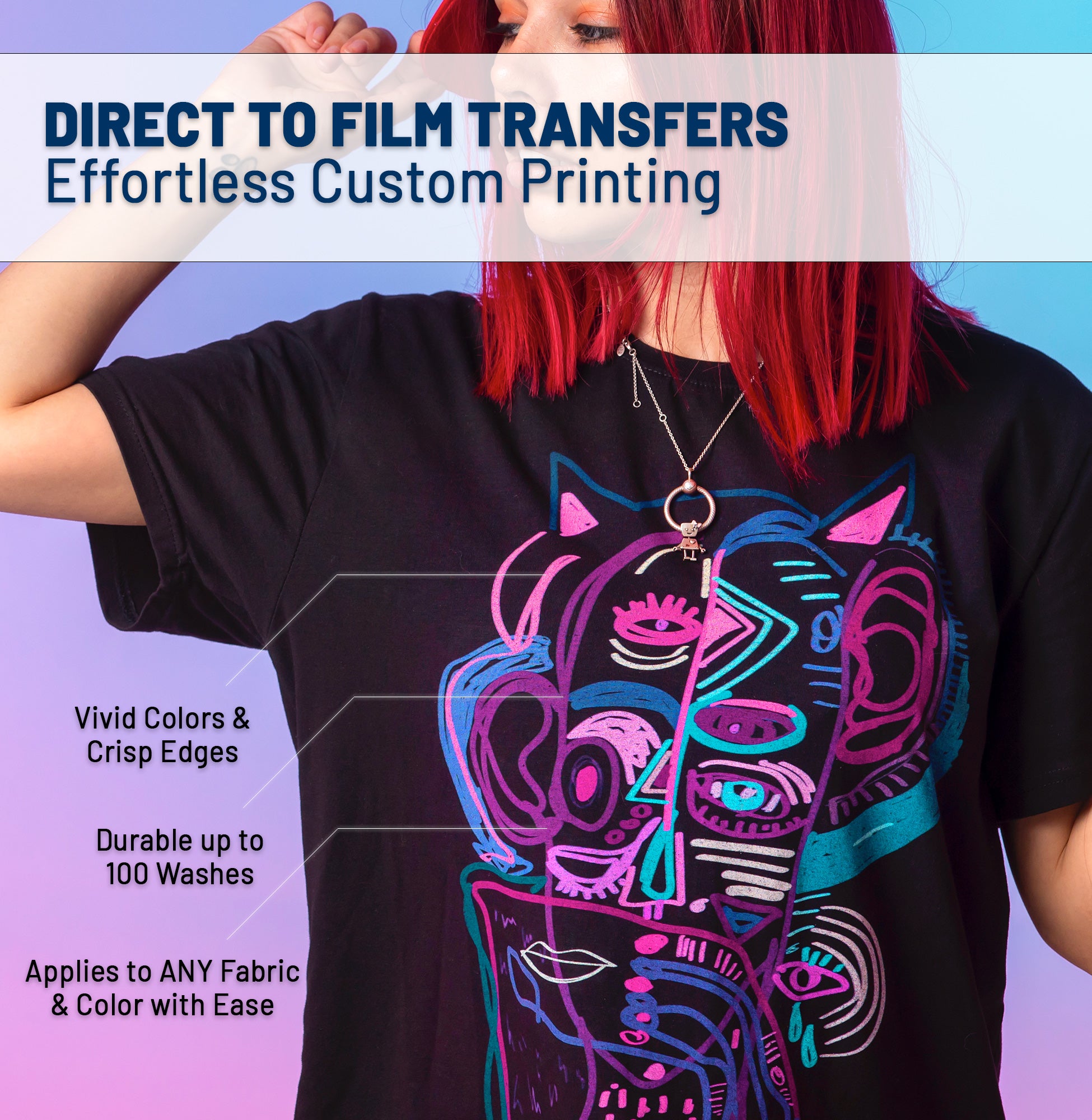




You've created beautiful custom apparel with premium DTF transfers—but your job isn't done yet. How your customers care for their garments will determine whether those prints look great after 5 washes or 100+. In this guide, we'll share the exact care instructions you should provide (and follow yourself) to maximize DTF print longevity.
🧬 Understanding DTF Transfer Composition
Before we dive into care instructions, it helps to understand what you're dealing with. A DTF transfer consists of three layers:
- PET Film – The carrier that holds the design during production (removed after pressing)
- Ink Layer – CMYK + White inks that create your full-color design
- Adhesive Powder Layer – Hot-melt TPU powder that bonds the ink to fabric permanently
The adhesive layer is what makes DTF prints so durable—when properly cured, it creates a flexible, washable bond that moves with the fabric. However, extreme heat, harsh chemicals, and mechanical abrasion can break down this bond over time.
🌊 Washing Instructions (The 5 Golden Rules)
Follow these five rules to keep DTF prints looking fresh:
Rule #1: Wait 24 Hours Before First Wash
After heat pressing, the adhesive continues to cure and strengthen its bond with the fabric. Washing too soon can compromise this process. Wait at least 24 hours—48 hours is even better for maximum durability.
Rule #2: Turn Garments Inside Out
This simple step reduces direct friction between the print and other items in the wash. It also protects against abrasion from zippers, buttons, and velcro on other clothing.
Rule #3: Use Cold Water (Max 30°C / 86°F)
Hot water can cause the adhesive to soften and the colors to fade faster. Always wash DTF-printed garments in cold or cool water. This also saves energy and is better for the environment!
Rule #4: Choose Gentle, Bleach-Free Detergent
Harsh chemicals and bleach can break down the ink and adhesive layers. Use a mild, color-safe detergent without optical brighteners. Avoid fabric softeners—they can leave a coating that affects print flexibility.
Rule #5: Use a Gentle Cycle
High-speed agitation puts stress on prints. Select a gentle or delicate wash cycle to minimize mechanical wear.
☀️ Drying Instructions
Drying is where many prints get damaged. Here's how to protect them:
✅ Best Option: Air Dry / Line Dry
Hanging or laying flat to dry is the gentlest method. Keep the garment inside out and away from direct sunlight, which can cause fading over time.
⚠️ Acceptable: Tumble Dry on LOW
If machine drying is necessary, use the lowest heat setting. Remove promptly when the cycle ends—leaving garments in a hot dryer can cause heat damage to prints.
❌ Never: High Heat Drying
High heat can cause DTF prints to crack, peel, or develop a "glazed" appearance. It can also re-activate the adhesive, causing it to stick to other garments.
🚫 What to Avoid
These common mistakes will shorten the life of any DTF print:
| ❌ DON'T | Why It's Harmful |
|---|---|
| Iron directly on the print | Causes melting, distortion, and adhesion to iron plate |
| Use bleach or chlorine | Breaks down ink pigments and adhesive polymer |
| Dry clean | Chemical solvents can dissolve adhesive layer |
| Scrub or brush the print | Physical abrasion wears away the surface |
| Store wet garments folded | Can cause print-to-print transfer and mold |
| Leave in hot car | Extreme heat can reactivate and damage adhesive |
🔧 If Ironing Is Necessary
Sometimes customers need to remove wrinkles. Here's how to iron without damaging the print:
- Turn the garment inside out so you're ironing the back of the fabric, not the print
- Use a low temperature setting (the "synthetic" setting is usually safe)
- Place a thin cloth or parchment paper between the iron and fabric as extra protection
- Never use steam directly over the print area
- Use quick, gentle motions—don't leave the iron in one spot
📦 Storage Best Practices
Proper storage matters, especially for inventory or unsold items:
- Store flat or hang – Avoid folding directly on the print area to prevent crease lines
- Keep in a cool, dry place – Avoid attics, garages, or anywhere with temperature extremes
- Use acid-free tissue paper – Place between stacked printed items to prevent print-to-print transfer
- Avoid plastic bags for long-term storage – They can trap moisture and cause issues
📋 Printable Care Card Template
Include this care card with every order to educate your customers and protect your reputation. A well-cared-for print means a happy customer who comes back for more!
✨ CARE INSTRUCTIONS ✨
- Wait 24+ hours before first wash
- Turn inside out
- Wash cold (30°C / 86°F max)
- Use gentle, bleach-free detergent
- Tumble dry low or hang dry
- Do not iron directly on print
- Do not dry clean
Proper care = 100+ washes! 🧺
📊 DTF vs. Other Print Methods: Durability Comparison
How does DTF hold up compared to other decorating methods?
| Method | Wash Durability | Feel | Care Difficulty |
|---|---|---|---|
| DTF | ⭐⭐⭐⭐⭐ | Soft, flexible | Easy |
| Screen Printing | ⭐⭐⭐⭐⭐ | Varies by ink | Easy |
| DTG | ⭐⭐⭐⭐ | Very soft | Easy |
| Sublimation | ⭐⭐⭐⭐⭐ | No feel (dyed in) | Easy |
| Heat Transfer Vinyl (HTV) | ⭐⭐⭐ | Thick, plasticky | Moderate |
| Cheap Iron-On Transfers | ⭐⭐ | Stiff, cracks easily | Difficult |
🎯 Summary: DTF Care Cheat Sheet
Cold Water Only
Inside Out
Low Heat Dry
No Bleach/Iron
Follow these guidelines, and your DTF prints will remain vibrant, flexible, and crack-free for years to come. Happy printing!
Questions about DTF care? Contact our support team—we're here to help!