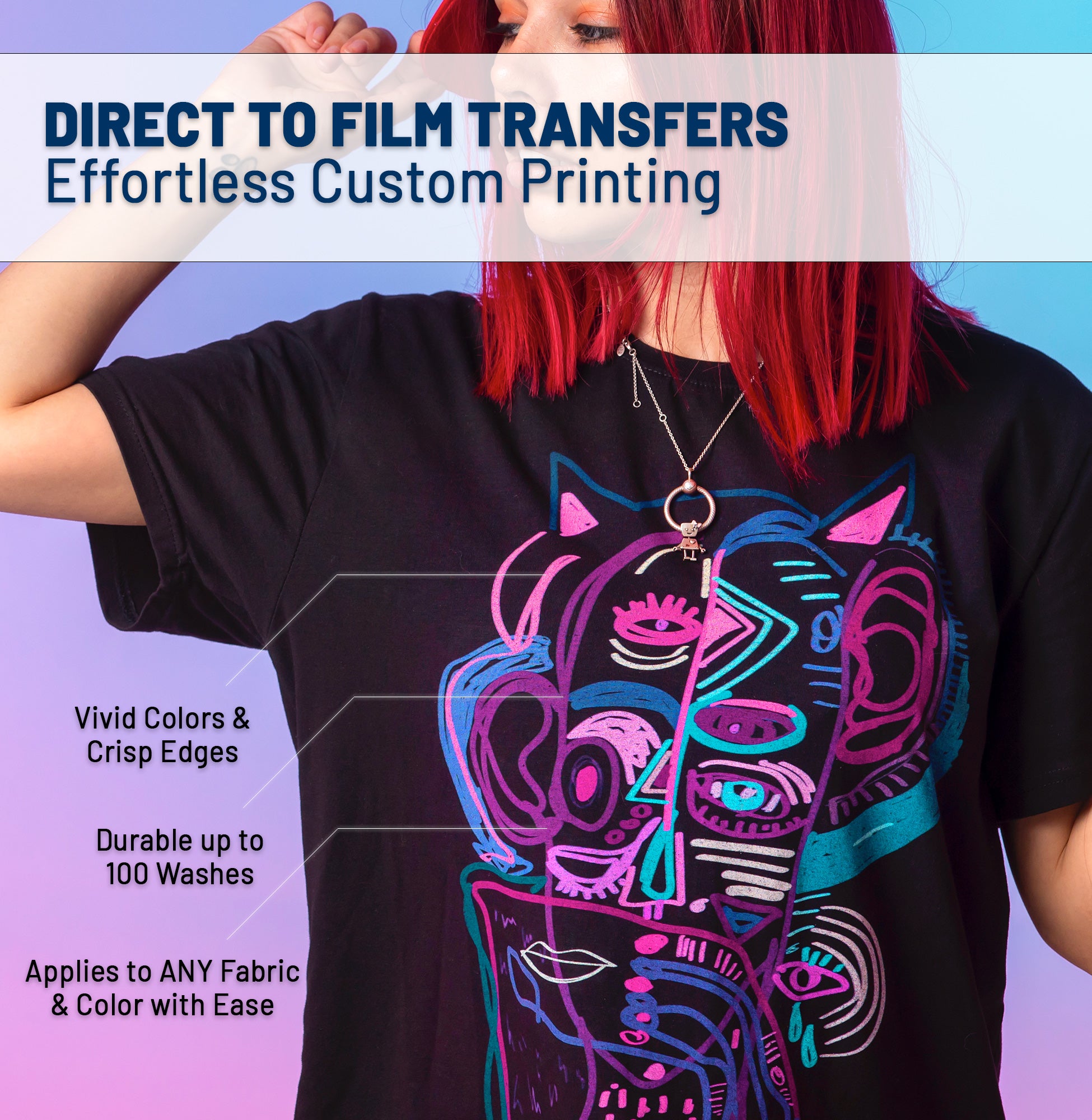




Even the best DTF setups encounter problems occasionally. The good news? Most issues have simple fixes once you know what to look for. Whether you're dealing with transfers that won't stick, colors that look off, or prints that crack after one wash, this guide will help you diagnose and solve the problem quickly.
📋 Quick Navigation
Jump to: Adhesion Problems • Appearance Issues • Durability Concerns • Equipment Errors
🔗 Section 1: Adhesion Problems
These are issues where the transfer doesn't bond properly to the fabric during or after heat pressing.
❌ Problem #1: Transfer Peels Off Immediately After Pressing
Symptoms: You peel the film and... nothing sticks. The entire design comes off with the carrier sheet.
Possible Causes & Solutions:
| Temperature too low | Increase to 320-330°F (160-165°C). Use an infrared thermometer to verify actual platen temperature. |
| Insufficient pressure | Increase pressure. You should need some effort to close a clamshell press. |
| Press time too short | Extend to 15-20 seconds for cotton, 10-15 for blends. |
| Fabric moisture | Pre-press fabric for 3-5 seconds to remove moisture before applying transfer. |
❌ Problem #2: Transfer Sticks to Some Areas But Not Others
Symptoms: Parts of the design transfer fine, but other sections (often edges or corners) peel off.
Possible Causes & Solutions:
| Uneven pressure | Your press may need calibration. Check for worn pads or uneven platen. Use a pressure test kit. |
| Seams or zippers underneath | Place a pressing pillow or foam pad inside the garment to create a flat surface. |
| Cold spots on platen | Test with thermal paper or temp strips across the entire platen surface. |
❌ Problem #3: Transfer Won't Release from PET Film
Symptoms: You try to peel the film, but it's stuck like glue. The design is tearing or stretching.
Possible Causes & Solutions:
| Wrong peel type | Some transfers are warm peel, others are cold peel. Check manufacturer specs and adjust accordingly. |
| Temperature too high | Excessive heat can melt the release coating. Reduce temperature by 10-15°F. |
| Press time too long | Over-pressing can cause similar issues. Reduce time incrementally. |
🎨 Section 2: Appearance Issues
These problems affect how the final print looks—colors, sharpness, and overall quality.
❌ Problem #4: Colors Look Dull or Washed Out
Symptoms: Your vibrant design file looks faded and muted once pressed onto the garment.
Possible Causes & Solutions:
- Insufficient white ink underbase: Increase white ink opacity in your RIP software, especially for dark fabrics.
- Low ink saturation: Adjust color density/saturation settings in RIP.
- Printhead issues: Run nozzle checks. Missing nozzles = missing ink = faded prints.
- Ink quality: Ensure ink isn't expired or from an unreliable source.
❌ Problem #5: Colors Don't Match the Design File
Symptoms: Your red looks orange, your blue looks purple—colors are way off from what you expected.
Possible Causes & Solutions:
- No ICC profile: Install and use the correct ICC color profile for your printer/ink/film combination.
- RGB vs CMYK: Ensure your design is in the correct color mode. Most RIPs expect RGB input and convert internally.
- Monitor calibration: Your screen may be lying to you. Use a calibration tool for accurate on-screen colors.
- Ink channels swapped: Rare, but possible. Run a color test print to verify channels.
❌ Problem #6: Visible White Border Around Design
Symptoms: There's a thin white "halo" or outline around the edges of your design.
Possible Causes & Solutions:
- Choke setting too low: Increase the "choke" or "underbase shrink" in your RIP to 0.5-1.5 pixels.
- Misalignment: If using spot white, ensure perfect registration between color and white layers.
- Film shifted during printing: Check film feed and tension settings on your printer.
❌ Problem #7: Banding or Horizontal Lines in Print
Symptoms: You see faint (or not so faint) horizontal lines across the printed design.
Possible Causes & Solutions:
- Clogged nozzles: Run cleaning cycles. If persistent, consider a deep clean or printhead soak.
- Bi-directional alignment off: Run a bi-directional alignment calibration in your printer software.
- Low print quality setting: Increase print quality/resolution if speed was prioritized.
- Worn printhead: Printheads have a lifespan. After millions of fires, replacement may be needed.
💪 Section 3: Durability Concerns
These issues appear after the initial press—when the garment is worn or washed.
❌ Problem #8: Print Cracks After First Wash
Symptoms: Customer comes back complaining the design is cracking or spider-webbing after washing.
Possible Causes & Solutions:
- Under-cured adhesive: Increase press time and/or temperature. The adhesive powder needs full activation.
- Too thick of an ink layer: Reduce ink density if possible. Thicker layers are less flexible.
- Poor quality powder: Use high-quality TPU adhesive powder designed for DTF.
- Customer care: Provide wash instructions. Hot water and high-heat drying accelerate wear.
❌ Problem #9: Print Peels Off After Washing
Symptoms: The entire transfer lifts off the fabric after a few washes.
Possible Causes & Solutions:
- Insufficient powder coverage: Ensure even, complete coverage of adhesive powder on the wet ink.
- Powder not melted fully: Increase cure time in the oven/dryer or increase press time.
- Fabric coating/treatment: Some performance fabrics have coatings that repel adhesives. Test first.
- Washed too soon: Advise customers to wait 24-48 hours before first wash.
❌ Problem #10: Print Fades Quickly
Symptoms: Colors lose vibrancy after just a few washes or sun exposure.
Possible Causes & Solutions:
- Low-quality ink: Invest in reputable DTF ink brands with good UV resistance.
- Improper curing: Under-cured prints are more susceptible to fading.
- Bleach or harsh detergents: Customer is using bleach. Provide care instructions.
- Direct sunlight storage: Advise against hanging printed garments in direct sunlight for extended periods.
🖨️ Section 4: Equipment & Process Errors
❌ Problem #11: Powder Not Sticking to Ink
Symptoms: Adhesive powder slides off the printed film instead of adhering.
Possible Causes & Solutions:
- Ink dried too fast: Apply powder immediately after printing, while ink is still wet.
- Environmental conditions: Low humidity causes faster drying. Consider a humidifier in your print room.
- Powder application method: Ensure full coverage. Shake off excess gently, don't wipe.
❌ Problem #12: Film Jamming or Feeding Incorrectly
Symptoms: PET film wrinkles, skews, or jams during printing.
Possible Causes & Solutions:
- Wrong film orientation: Ensure coated (printable) side is facing the correct direction.
- Incorrect tension: Adjust feed and take-up tension settings.
- Humidity issues: Film can curl in very dry environments. Store properly.
- Dirty rollers: Clean feed rollers regularly to prevent slippage.
📌 Quick Fixes for Other Common Issues
| #13: Print has a shiny/glossy appearance | Too much pressure or heat. Reduce slightly for matte finish. |
| #14: Design shifted during pressing | Use heat-resistant tape to secure transfer position before pressing. |
| #15: Scorching or burn marks on fabric | Temperature too high for fabric type. Reduce heat for synthetics. |
📞 When to Seek Professional Help
If you've tried the fixes above and problems persist, consider:
- Contacting your printer/RIP software manufacturer's support
- Consulting with your ink/powder supplier
- Joining DTF printing communities and forums for peer advice
- Ordering from a professional DTF supplier (like us!) while you troubleshoot
Need reliable, hassle-free transfers? Shop our Ready-to-Press DTF collection and let us handle the technical challenges while you focus on growing your business.