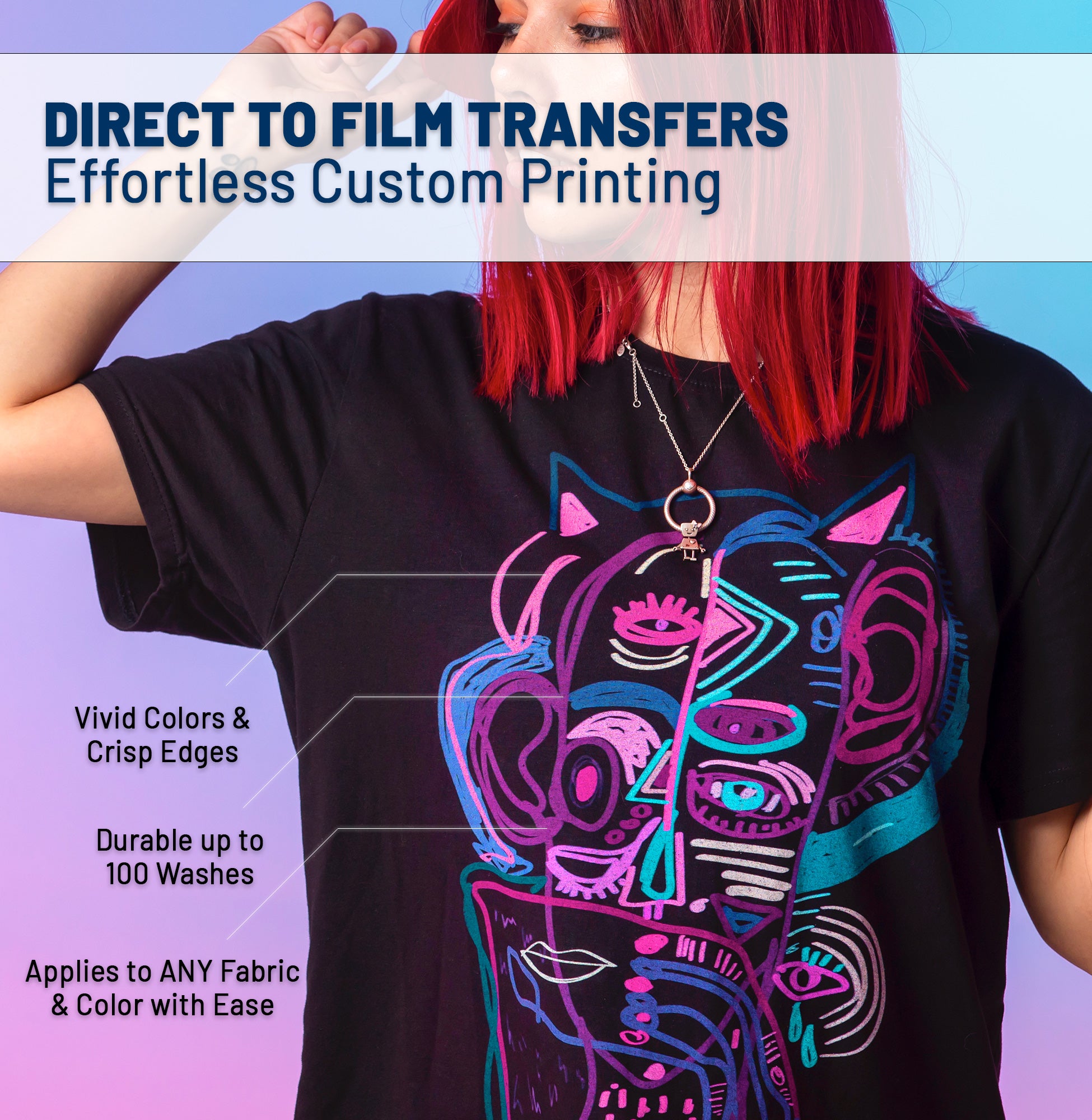




Choosing the right fabric is just as important as having a great design. The wrong material can lead to peeling, cracking, or faded prints—even if you've done everything else perfectly. In this comprehensive guide, we'll explore which fabrics work best with DTF (Direct to Film) transfers and share insider tips for achieving professional results on any material.
🧵 Understanding DTF and Fabric Compatibility
DTF printing works by transferring a layer of ink and adhesive powder onto fabric using heat and pressure. Unlike DTG (Direct to Garment) printing, which requires the ink to penetrate the fabric fibers, DTF creates a thin film that sits on top of the material. This fundamental difference is why DTF works on a much wider range of fabrics.
The key factors that determine how well DTF adheres to any fabric are:
- Heat tolerance – Can the fabric withstand 300-330°F without damage?
- Surface texture – Smooth surfaces allow better contact with the transfer
- Moisture content – Wet or damp fabrics cause adhesion problems
- Fabric coatings – Some materials have water-resistant or anti-stain treatments that block adhesion
✅ Best Fabrics for DTF Printing (Tier 1)
These materials deliver excellent results with standard heat press settings and require minimal special handling:
1. 100% Cotton
Cotton remains the gold standard for DTF printing. The natural fibers create an ideal surface for adhesive bonding, and cotton can easily handle the high temperatures required for proper curing.
| Temperature | 320-330°F (160-165°C) |
| Time | 15-20 seconds |
| Pressure | Medium-Heavy (40-50 PSI) |
| Peel | Warm peel |
2. Cotton/Polyester Blends (50/50 and 60/40)
Blended fabrics combine the comfort of cotton with the durability of polyester. They're extremely popular for casual wear and work well with DTF. However, you'll need to slightly reduce your temperature to prevent the polyester fibers from becoming shiny or damaged.
Recommended Settings: 300-315°F, 12-15 seconds, medium pressure, warm peel
3. Tri-Blends (Cotton/Polyester/Rayon)
The addition of rayon creates an ultra-soft hand feel that customers love. Tri-blends require gentler handling but produce beautiful results. The slight stretch in these fabrics means your design will move naturally with the garment.
Recommended Settings: 290-305°F, 10-12 seconds, medium pressure, warm peel
⚠️ Fabrics That Require Special Attention (Tier 2)
100% Polyester
Polyester presents two main challenges for DTF printing:
- Dye Migration (Sublimation) – The dyes in colored polyester fabrics can "migrate" or bleed through your transfer when exposed to heat, causing discoloration (especially with red, maroon, and royal blue fabrics).
- Heat Sensitivity – Polyester can melt, shrink, or develop a shiny "glazed" appearance if you use too much heat or time.
Performance/Athletic Fabrics (Dri-Fit, Moisture-Wicking)
Most athletic wear is made from specially treated polyester. The moisture-wicking coatings can sometimes interfere with DTF adhesion. Always test a sample first, and consider using polyester-specific transfers.
Nylon
Nylon has a lower melting point than polyester, making it more challenging. Use the lowest possible temperature (around 270-285°F) and the shortest time that still achieves full adhesion. Always cold peel with nylon.
❌ Fabrics to Avoid (Tier 3)
While DTF is versatile, some materials are simply not compatible:
- Leather & Faux Leather – Cannot withstand the required heat
- Waterproof/Rainwear – Coatings prevent adhesion
- Loose-Weave Fabrics – Mesh, lace, and open-weave materials don't provide enough surface area
- Heavily Textured Fabrics – Deep ribbed or waffle-knit fabrics prevent consistent contact
- Silk & Delicate Fabrics – Will be damaged by heat press temperatures
🔬 Quick Reference Chart
| Fabric | Temp °F | Time | Pressure | Peel |
|---|---|---|---|---|
| 100% Cotton | 320-330 | 15-20s | Heavy | Warm |
| 50/50 Blend | 300-315 | 12-15s | Medium | Warm |
| Tri-Blend | 290-305 | 10-12s | Medium | Warm |
| 100% Polyester | 275-290 | 10-12s | Light-Med | Cold |
| Nylon | 270-285 | 8-10s | Light | Cold |
📋 Pre-Application Checklist
Before pressing any DTF transfer, run through this quick checklist:
- ✅ Identify the fabric content – Check the garment tag
- ✅ Pre-press the garment – 3-5 seconds to remove moisture and wrinkles
- ✅ Position your transfer – Use a ruler or alignment tool for consistency
- ✅ Verify your settings – Temperature, time, and pressure for this specific fabric
- ✅ Apply even pressure – Make sure your heat press is properly calibrated
- ✅ Peel correctly – Warm or cold, depending on material
- ✅ Post-press if needed – Some fabrics benefit from a 5-second finish press with parchment paper
🎯 Final Thoughts
DTF printing's greatest strength is its versatility across different fabric types. Once you understand how each material responds to heat and how DTF adhesive bonds with different fiber compositions, you'll be able to confidently print on almost anything your customers bring to you.
When in doubt, always test on a sample first. Keep a fabric swatch book with notes on what settings worked best for each material. This reference will save you time and prevent costly mistakes as your business grows.
Need premium DTF transfers that work flawlessly on any fabric? Shop our Ready-to-Press collection or upload your own design for custom printing.
```